Outdoor kitchens on Gulf-front and flood-zone lots
Two rules shape kitchens near the Gulf: the state's coastal construction control line and the federal requirement to keep the space under an elevated V-zone home open.
A Gulf-front lot brings two rules most inland homeowners never meet. Florida draws a coastal construction control line along its sandy beaches and limits building seaward of it. The federal flood insurance program sets rules for the space under elevated homes in coastal high-hazard zones. Either one can decide where your outdoor kitchen goes.
The coastal construction control line
Under Florida Statutes 161.053, the Department of Environmental Protection (DEP) sets a coastal construction control line (CCCL), county by county, along the state's sandy Gulf beaches. Once DEP adopts a county's line, no one may build a structure seaward of it without DEP authorization: a permit, or an exemption determination. A county or city can adopt its own coastal codes only with DEP approval.
DEP's rule 62B-33.002 sorts structures into classes. It defines "minor structures" as ones "designed to be expendable" and to break away under high-frequency storm forces with minor impact on the beach and dune system. It lists swimming pools and garages among "nonhabitable major structures." The rule doesn't mention outdoor kitchens, so DEP decides how it classifies yours.
How it plays out locally. Walton County's long-standing handout says the county won't issue building permits for work seaward of the CCCL unless you submit a DEP "Notice to Proceed" or "Exemption Determination." The county's 2026 building checklist also requires plans stamped and sealed by a Florida registered architect or engineer for work inside its coastal construction zone. So for work seaward of the line, DEP review comes first and the local permit follows.
Finding the line. DEP publishes the CCCL in an online map viewer, linked from its program page. Your survey may also show it. If the line crosses your lot, sketch the kitchen on the landward side first and see whether it still works.
V and VE flood zones
The National Flood Insurance Program sets minimum rules for communities that join it. Coastal high-hazard areas carry the labels V, V1-30, or VE on FEMA flood maps. In those zones, 44 CFR 60.3(e) requires new construction and substantial improvements to:
- sit on pilings or columns, with the bottom of the lowest horizontal structural member at or above base flood elevation; and
- keep the space below the lowest floor "either free of obstruction or constructed with non-supporting breakaway walls, open wood lattice-work, or insect screening intended to collapse under wind and water loads."
That second rule matters for outdoor kitchens. The open ground level under an elevated home can look like a natural spot for a kitchen: shaded, out of the rain, close to the pool. The local floodplain administrator decides how your design is treated.
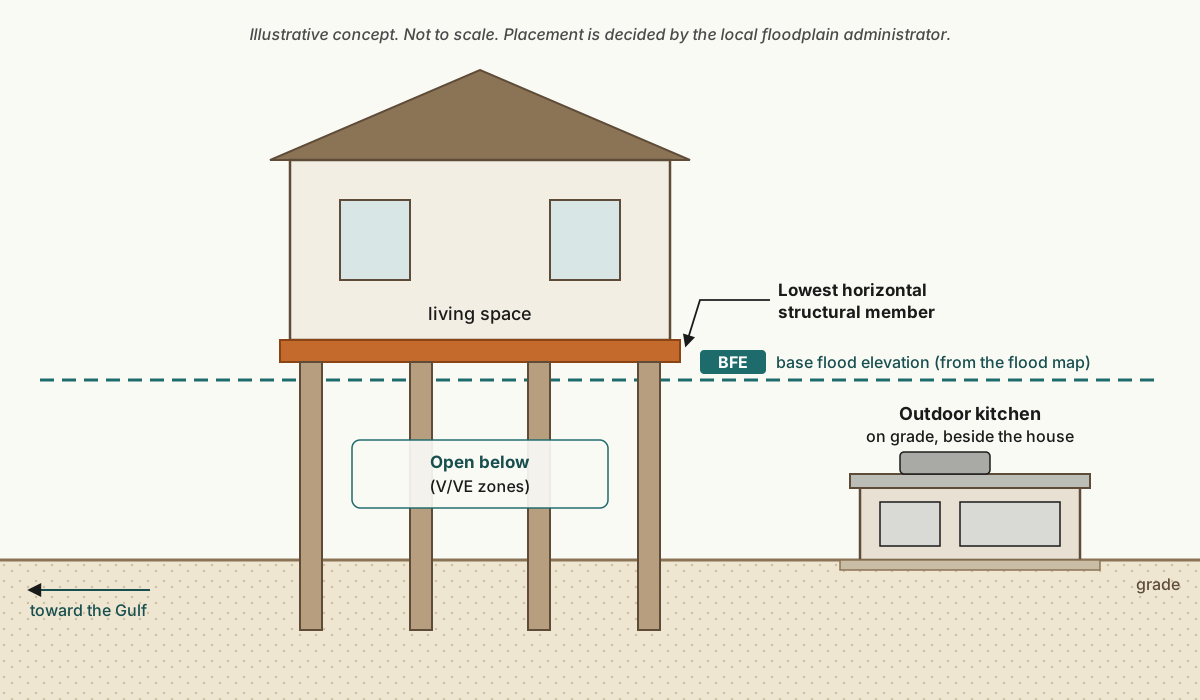
Options to discuss with the floodplain administrator and your designer:
- Beside the house, on grade. Moving the kitchen out from under the lowest floor avoids the question.
- Portable equipment. A freestanding grill and cart that you roll away raise fewer issues than built-ins.
- A separate cover. A pergola or roof beside the house gives shade without putting anything under the home. In Walton County, its plans need the wind load statement like any other structure.
A, AE, and X zones
Lots back from the beach may fall in A or AE zones, or outside the mapped flood hazard area. Walton County still requires a flood zone statement on plans for any property in a flood zone. Look up your zone on FEMA's Flood Map Service Center before you plan.
Destin's flood program. The City of Destin takes part in FEMA's Community Rating System at Class 6. The city says that rating puts it in the top 15% of communities nationwide and gives policyholders in the Special Flood Hazard Area a 20% premium discount. Destin's Engineering Department, within Community Development, answers flood questions.
Storm season planning
The Atlantic hurricane season runs from June 1 to November 30, and the National Hurricane Center places its climatological peak on September 10. For an outdoor kitchen on an exposed lot:
- Decide where grill covers, cushions, and rolling carts go when a storm approaches.
- Put a gas shutoff where you can reach it without moving furniture.
Questions to ask before you apply
- Is any part of the lot seaward of the CCCL? If so, does the project need a DEP permit or exemption before the local permit?
- What is the flood zone and base flood elevation for this lot?
- If the home is elevated in a V or VE zone, how would the floodplain administrator treat a kitchen under it?
- Does the kitchen, a roof over it, or the patio need sealed plans?
The permit guide covers each office's process, and the HOA guide covers association review. To talk with a local contractor about a Gulf-front lot, send a request.
Sources
- Florida Statutes 161.053, Coastal construction and excavation
- Florida Administrative Code Rule 62B-33.002, Definitions
- Florida DEP: Coastal Construction Control Line Program
- Walton County: Projects Seaward of the Coastal Construction Control Line
- 44 CFR 60.3, Flood plain management criteria (eCFR)
- City of Destin: Flood Information
- Walton County Building Department: Checklist for Building Permits (rev. 07/21/26)
- FEMA Flood Map Service Center
- NOAA National Hurricane Center: Tropical Cyclone Climatology
Rules, rates, and costs change. Confirm details with the agency or a qualified professional before you act on them.
Keep reading
-
Permits for an outdoor kitchen in Destin, Walton County, and Panama City Beach
The City of Destin, Walton County, and the City of Panama City Beach issue most permits along this coast. Here is how to tell which one has your lot, what each asks for, and what changes when Florida's next building code takes effect.
Updated
-
HOA and design review for an outdoor kitchen on 30A
Florida law limits HOA design review to what the governing documents say. Seaside and WaterColor publish their rules; elsewhere, start by asking for the current guidelines.
Updated
Planning an outdoor kitchen on the Emerald Coast?
Describe the property and what you have in mind. The request goes to an independent local contractor, who may contact you about it.